


Over the iron bridge
Long Biên at dusk, then down to the banana fields on the sandbank.
- Length
- 3 hours
- Starts
- 16:30
- Group
- Up to 8
- From
- USD 39

Sông Hồng
Long Biên
An iron bridge, and the river the city is named for.
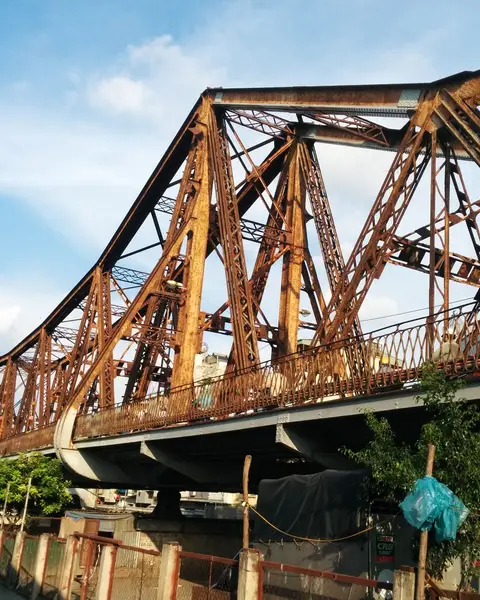
Hà Nội means “inside the river”, a name given in 1831. The Red River runs the colour of wet clay, and Long Biên Bridge, which opened in 1903, crosses it on iron trusses. It was designed by the French firm Daydé & Pillé and is often credited, wrongly, to Eiffel. Trains, motorbikes, bicycles and people on foot use it. Cars are not allowed.
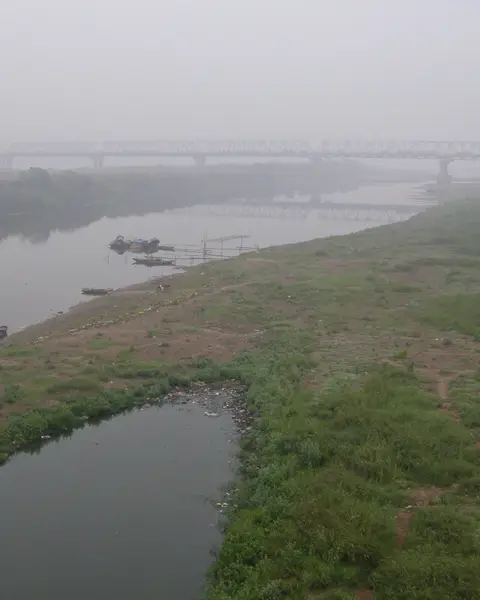
Below the bridge, on the river's sandbank, there are banana groves and small fields, which turn blue at dusk.
Late afternoon, to walk the bridge towards dusk. December to March is the dry stretch, with under 40 mm of rain a month, and the river is lower then.
Walk on the inside of the deck and stay clear of the rails when a train comes. People farm the sandbank: keep to the paths, and ask before photographing anyone at work.
Walk it from the Hà Nội end towards the far bank.
Banana groves and small fields on the river's island.
Clay-brown water turning grey, then blue.
Where the line climbs from the city to the first truss.
Long Biên at dusk, then down to the banana fields on the sandbank.

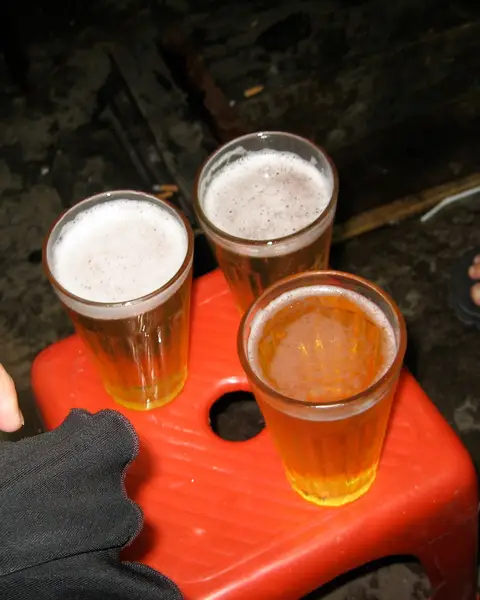
Eight stops on an evening walk. Bia hơi included.